
The Gathas, composed by Zarathushtra (Zoroaster), are considered the core teachings of the Zoroastrian religion. They form the oldest and most sacred part of the Avesta, the primary body of Zoroastrian religious texts. The Gathas are regarded as spiritual teachings intended to inspire reflection, wisdom, and righteous living.
Other sections of the Avesta reflect broader Zoroastrian and ancient Iranian traditions developed over time by various authors. These texts preserve important aspects of religious practice, culture, and historical tradition, though not all are directly attributed to Zarathushtra himself.
Zoroastrianism is a monotheistic religion centered on belief in one God, known as Ahura Mazda, meaning the “Wise Lord” or “Supreme Wise Creator.” In the Gathas, Zarathushtra describes Ahura Mazda as the source of wisdom, righteousness, and life.
Zoroastrianism is commonly symbolized by Fravahar, which originates from ancient Persian carvings found at Persepolis during the Achaemenid era (550–330 BCE). Many scholars believe the symbol represents Khvarenah or Farr, meaning Divine or Royal Glory — a spiritual grace associated with righteousness, wisdom, and legitimate leadership.
In Persian tradition, Divine Glory was believed to remain with just and virtuous rulers and to depart from those who strayed from the path of truth and justice (Asha). Beyond kingship, the concept also reflects the idea that individuals can attain spiritual greatness through good thoughts, good words, and good deeds.
Today, the Fravahar is widely understood as a symbol of spiritual progress, ethical living, and the continual striving toward truth and righteousness.
Zoroastrianism emphasizes respect for and protection of nature, especially the elements of fire, water, air, and earth. Caring for the environment and avoiding pollution are important aspects of both Zoroastrian religious teachings and tradition.
Fire holds special spiritual significance in Zoroastrian practice, symbolizing light, warmth, purity, and enlightenment. Many Zoroastrians pray or meditate in the presence of fire or light as a way of connecting spiritually with Ahura Mazda.
Source: Original content adapted and summarized from fezana.org/education/zoroastrianism
Zoroastrian Global Glossary: fezana.org/glossary
More resources on Zoroastrianism: zarahushtra.com
The Seven Amesha Spentas
The Amesha Spentas, meaning “Bountiful Immortals,” are central spiritual concepts in Zoroastrianism and represent the divine attributes of Ahura Mazda. They form an ethical framework that guides Zoroastrians in living a righteous and meaningful life.
According to Zoroastrian tradition, the seven Amesha Spentas are connected with the seven creations: sky, water, earth, plants, animals, humanity, and fire. Each represents values such as truth, wisdom, devotion, strength, perfection, and immortality, encouraging individuals to live with good thoughts, good words, and good deeds.
The Amesha Spentas are honored throughout Zoroastrian prayers, ceremonies, festivals, and the calendar. Respecting and caring for the seven creations is considered an important religious responsibility and reflects the Zoroastrian emphasis on harmony with nature and the environment.
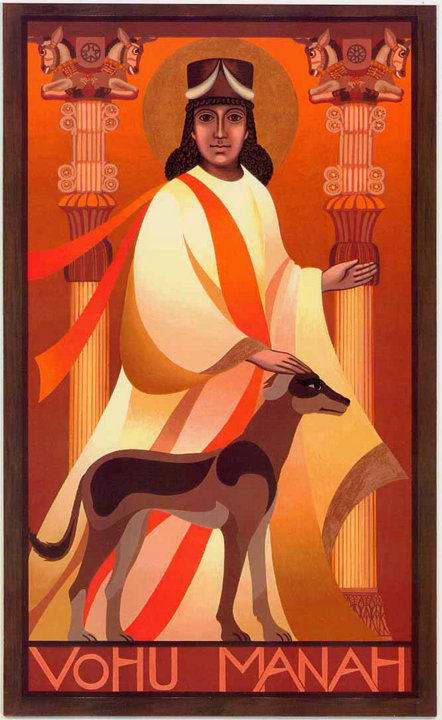
Vohu Manah (Vohu Mano, Vohuman)
Vohu Manah is the “Good Mind, Intelligence and Good Thinking.” It stands for the discerning wisdom and thorough thinking required for leading a useful life. It is the generator of Good Thoughts, Good Words and Good Deeds. He was the first Amesha Spenta created by Ahura Mazda, at whose right hand he sits.
Associated with: Animals
Asha Vahishta (Ardwahisht)
Asha Vahishta means “Truth and Justice.” It embodies Righteousness, Truth, Order, Justice and Progress — the universal law of righteous precision. Every Zoroastrian strives to follow the Path of Asha in its highest and deepest spiritual sense. He was the second Amesha Spenta created and is the most prominent of the male Amesha Spentas.
Associated with: Fire & Animals

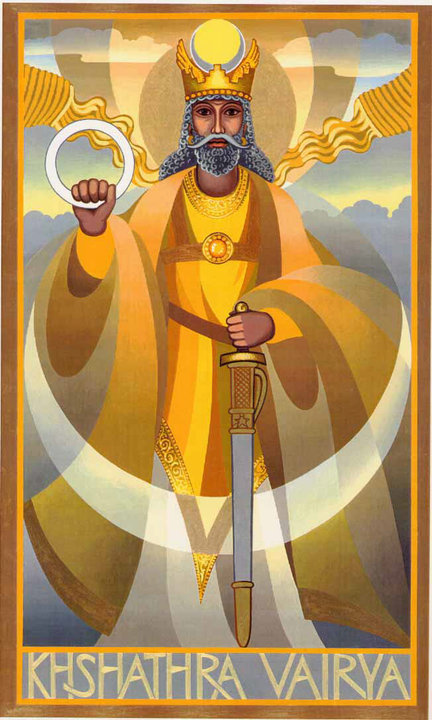
Khshathra Vairya (Shahrewar)
Khshathra Vairya means “Righteous Power.” It denotes the power to settle in peace, chosen by free and wise people as their ideal order in spirit and matter. He symbolizes self-control and good authority which ushers in prosperity and the Kingdom of God.
Associated with: The Sky and Metals
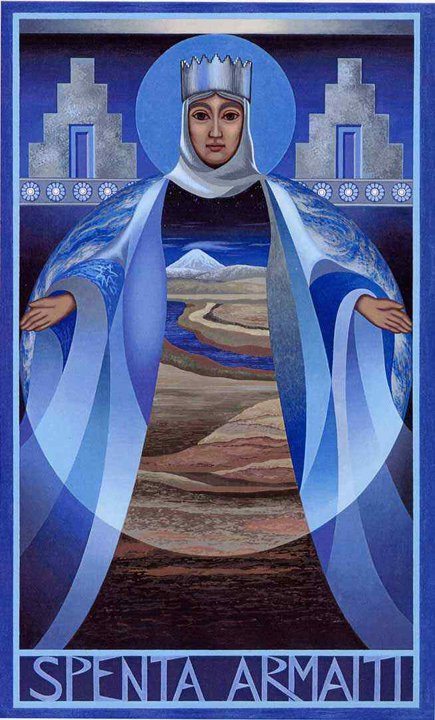
Spenta Armaiti (Spandarmad)
Spenta Armaiti means “Holy Serenity, Devotion” — also Tranquility and Holy Compliance. She is an earth and fertility goddess and daughter of Ahura Mazda, and was the fourth Amesha Spenta created. She personifies holy devotion, righteous obedience, and perfect mindedness gained through humility, faith, and piety.
Associated with: The Earth

Haurvatat (Hordad)
Haurvatat means “Wholeness, Integrity, Health and Completion.” She is the Amesha Spenta that presides over water and is the personification of perfection. She guards the spiritual and physical natures of water and brings prosperity and health.
Associated with: Waters
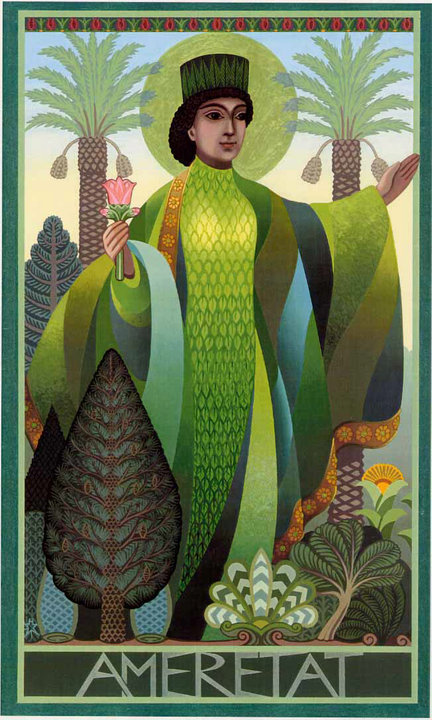
Ameretat (Amurdad)
Ameretat means “Deathlessness and Immortality.” Together with Haurvatat, it represents the completion of our evolutionary development and the final achievement of our life on earth. She is associated with plants and personifies immortality and eternal life.
Associated with: Plants
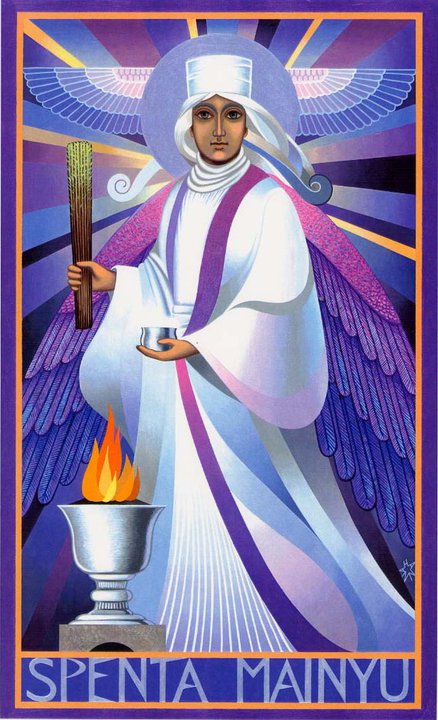
Spenta Mainyu
Spenta Mainyu means “The Holy Creative Spirit.” He is the spirit of Ahura Mazda, active in the world, with dominion over humans. He is the god of life, personifying light and goodness in the world and people. Later he became identified with Ormazd, while Ahura Mazda became known as Zurvan.
Associated with: Human Beings
Text and photos by Hanna Shapiro | Download: Amesha Spentas PowerPoint